

HSE and Communication University of Zhejiang Strengthen Partnership in Creative Education
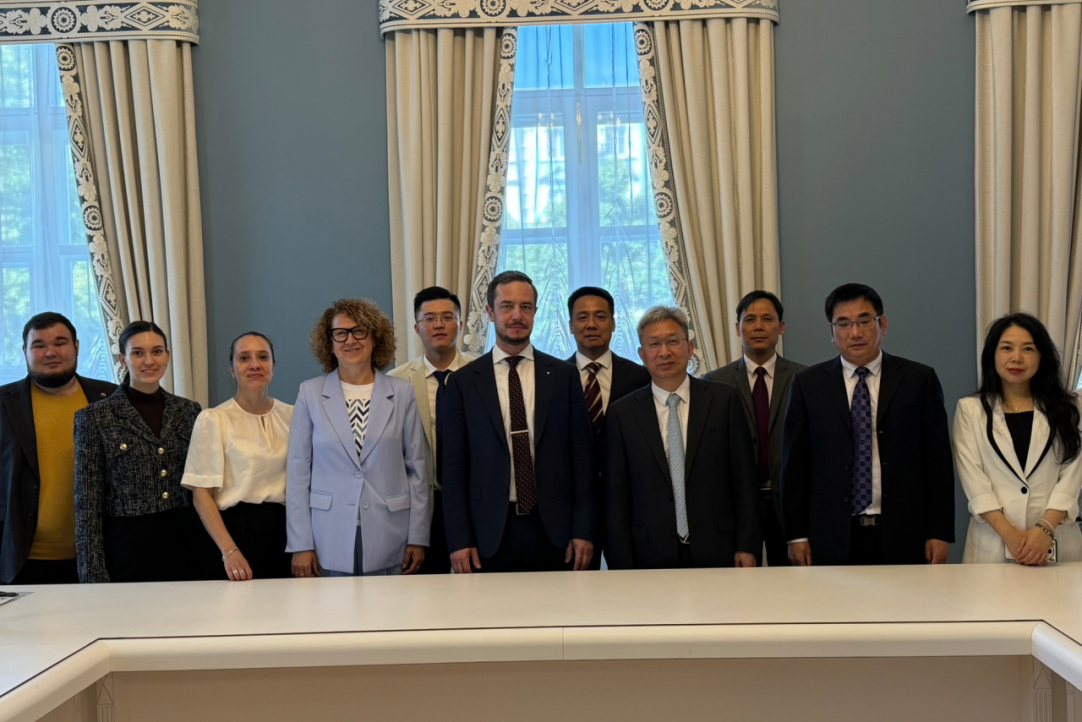
On July 7, 2025, HSE University hosted a delegation from China at the historic Durasov House. The delegation, led by Wei Guotan, Chair of the University Council of Communication University of Zhejiang (CUZ), was welcomed by HSE Vice Rector Dmitry Zemtsov, Deputy Dean of the Faculty of Creative Industries Tatiana Rivchun, and representatives of the HSE Institute for Creative Industries Development and the HSE Art and Design School—the initiators of the partnership with their Chinese colleagues.
The visit focused on the further development of collaboration between the two universities. They already have experience of cooperation through academic and practical seminars on building global careers in the creative industries, as well as expert involvement in the HSE Creative Open competitions.
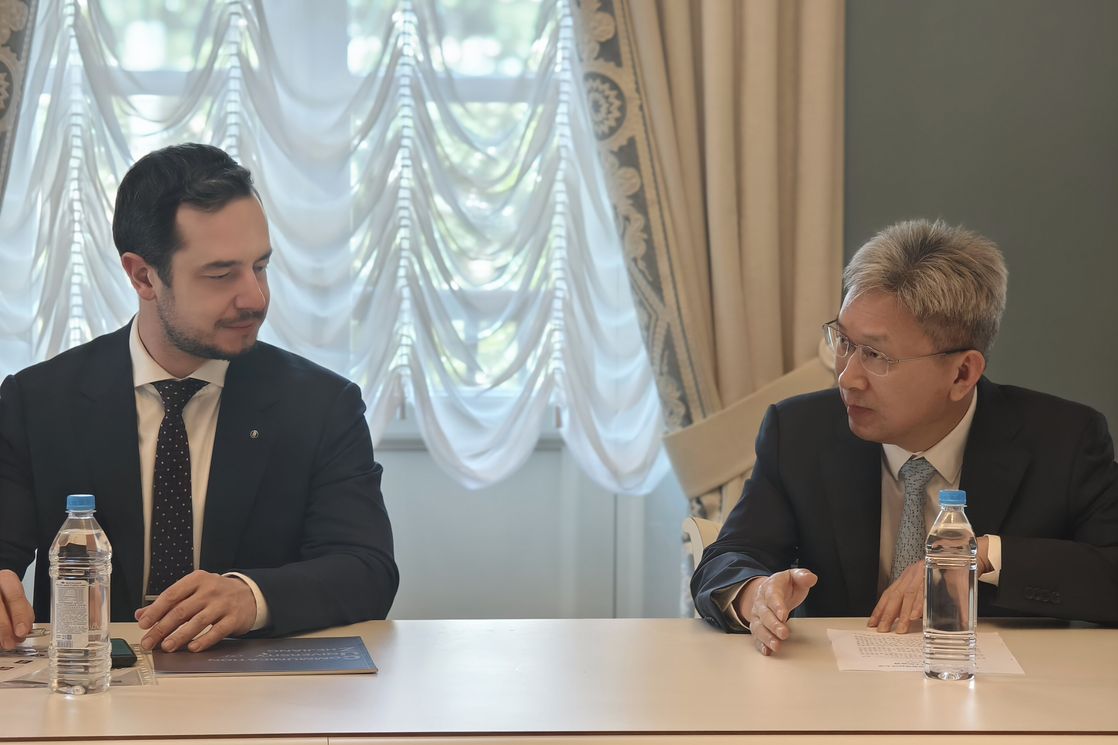
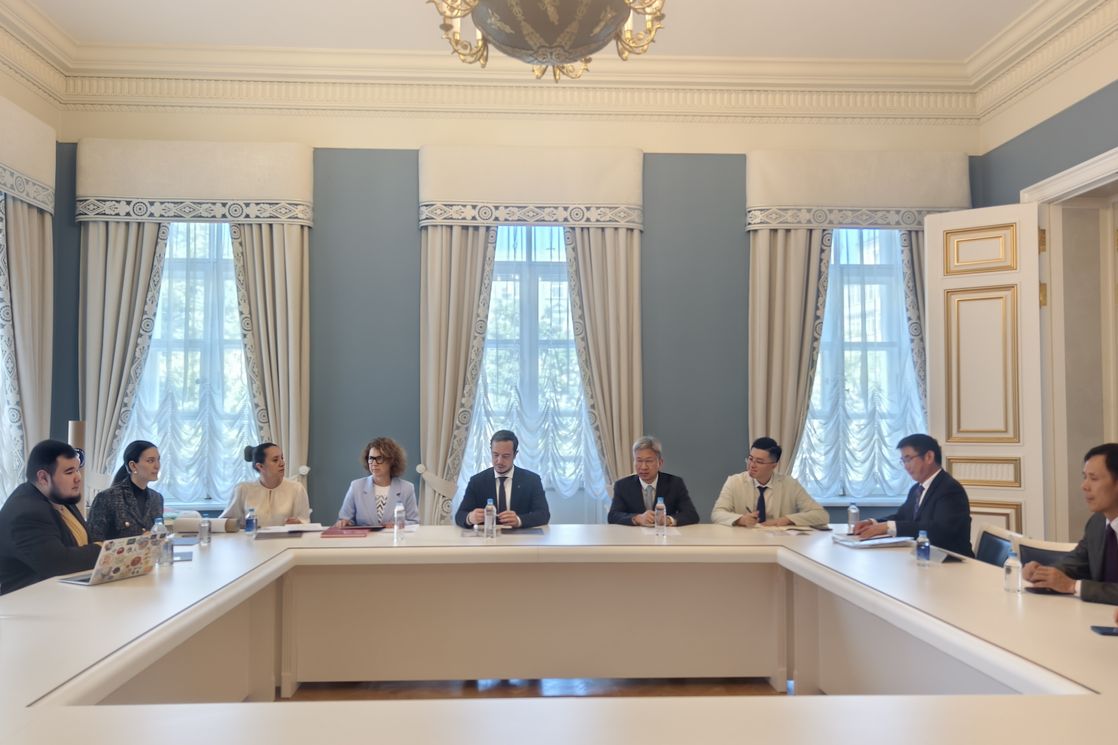

At the opening of the meeting, Dmitry Zemtsov highlighted the importance of developing international partnerships for HSE University, which ranks among the world’s top 100 universities in several subject areas according to the QS World University Rankings by Subject. The vice rector emphasised the value of cooperation in implementing initiatives to support young professionals, including international competitions. He also noted the significant contribution that CUZ—with its extensive expertise in contemporary media, communications, and design—could make to the work of the HSE Art and Design School and the Institute for Creative Industries Development.
‘HSE University offers double degree undergraduate and master’s programmes in partnership with world-class universities. We look forward to building on our existing ties through new joint projects, competitions, and postgraduate educational programmes,’ said Dmitry Zemtsov.
In his response, Wei Guotan stressed the importance of collaboration with HSE University for CUZ, one of China’s leading universities in the field of communications. Founded in 1978 through a joint initiative by the Zhejiang provincial government and the National Radio and Television Administration, CUZ has two campuses in Hangzhou and Tongxiang. The university has partnerships with over 150 international institutions, and many of its students continue their studies abroad.
‘We are interested in academic exchange for both students and faculty, as well as in developing joint educational programmes, and we would be glad to welcome representatives of HSE University to our institution,’ Mr Wei said in his speech.
Tatiana Rivchun, Deputy Dean of the Faculty of Creative Industries and Director of the Institute for Creative Industries Development, confirmed a shared readiness to cooperate across a wide range of fields within the creative industries. These are well represented at both CUZ and HSE University, not only in design and creative industries management, but also in areas especially relevant to the Chinese side—journalism, television and radio broadcasting, cinema, music, and more.
‘A key feature of contemporary education in the creative industries is its project-oriented nature,’ Tatiana Rivchun emphasised. ‘At HSE, this approach is supported by our digital platform, which our Chinese colleagues have already encountered through their participation in the HSE Creative Open competition jury.’ The platform—hse.space—offers digital portfolios and related services that have extended beyond the faculty, the university, and even the country.
‘Our Creative City platform, which showcases projects tied to specific locations—cities and places on the map—helps our institute and school to compile a database of best practices aimed at enhancing urban appeal and engaging with local heritage. We are pleased that it already features projects from a variety of countries, and we look forward to increasing the number of Chinese and joint projects represented,’ Tatiana Rivchun added.
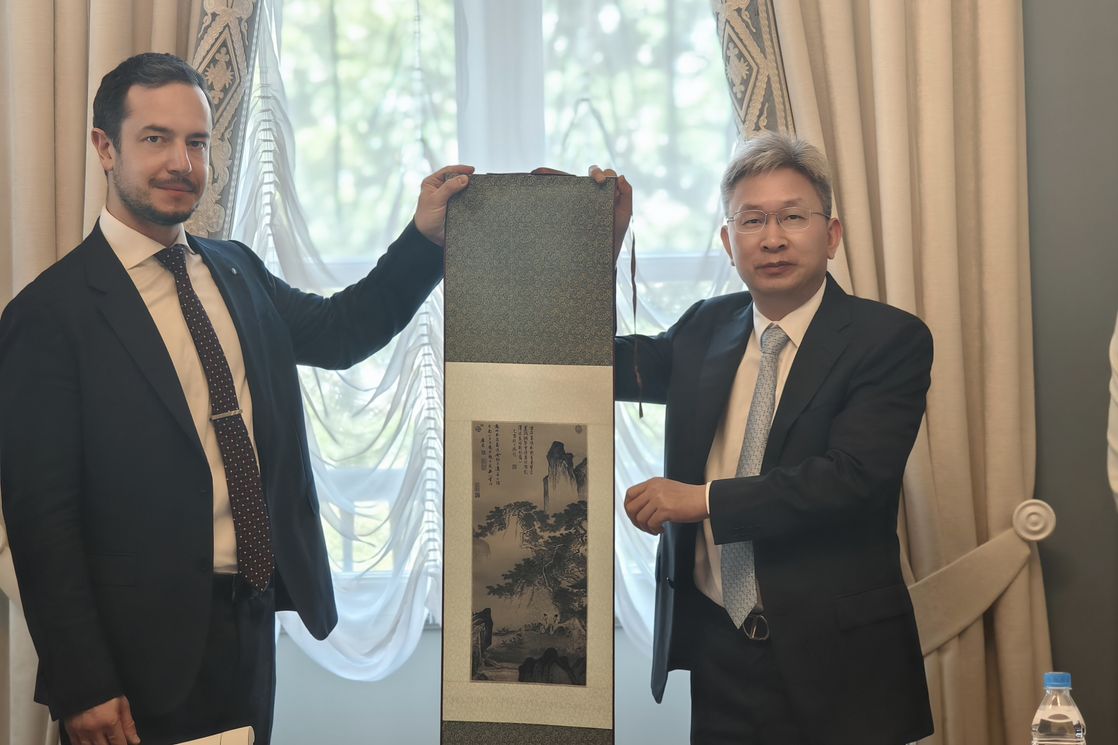
The parties exchanged gifts. HSE University presented images and an original print—a stylised view of Moscow—from the HSE Cities Collection illustration series by Alexandra Yeremina, student of the Art and Design School. The collection features all of HSE’s campuses. In return, Wei Guotan presented an original print in the style of traditional Chinese woodcut.
First, the Chinese delegation had a guided tour of Durasov House, where the guests learned about the historical, architectural, and cultural significance of the heritage site. They then explored HSE’s educational environment further at the Art and Design School and the Institute for Creative Industries Development on 12 Malaya Pionerskaya Street. There, the delegation visited lecture rooms and computer labs, explored studios, the Design Lab, shop, and gallery—all spaces that illustrate the transition from education to professional, commercial, and creative application in modern creative education. At the close of the visit, the Chinese colleagues reiterated their interest in continuing joint work through the portfolio platform and competition framework, and in discussing shared educational programmes and academic exchanges.
See also:

Scientists Test Asymmetry Between Matter and Antimatter
An international team, including scientists from HSE University, has collected and analysed data from dozens of experiments on charm mixing—the process in which an unstable charm meson oscillates between its particle and antiparticle states. These oscillations were observed only four times per thousand decays, fully consistent with the predictions of the Standard Model. This indicates that no signs of new physics have yet been detected in these processes, and if unknown particles do exist, they are likely too heavy to be observed with current equipment. The paper has been published in Physical Review D.
HSE Scientists Reveal What Drives Public Trust in Science
Researchers at HSE ISSEK have analysed the level of trust in scientific knowledge in Russian society and the factors shaping attitudes and perceptions. It was found that trust in science depends more on everyday experience, social expectations, and the perceived promises of science than on objective knowledge. The article has been published in Universe of Russia.
Institute for Robotics Systems Established at HSE University
As decided by the HSE University Academic Council, a new Institute for Robotics Systems will be established at HSE, and with a strong fundamental base. It will cooperate with relevant departments across the university and engage students and doctoral candidates in research and development (R&D). First Vice Rector of HSE University and Director of the Institute for Statistical Studies and Economics of Knowledge, Leonid Gokhberg, discussed the expected practical results and the framework for cooperation with an industrial partner.
HSE Tops Ranking of Universities Participating in Priority 2030 Programme
The Russian Ministry of Science and Higher Education has published an updated list of participants in the Priority 2030 programme. A total of 106 universities will receive support this year. HSE University was included in the first group and topped the ranking.
HSE Psycholinguists Launch Digital Tool to Spot Dyslexia in Children
Specialists from HSE University's Centre for Language and Brain have introduced LexiMetr, a new digital tool for diagnosing dyslexia in primary school students. This is the first standardised application in Russia that enables fast and reliable assessment of children’s reading skills to identify dyslexia or the risk of developing it. The application is available on the RuStore platform and runs on Android tablets.
HSE Scientists Optimise Training of Generative Flow Networks
Researchers at the HSE Faculty of Computer Science have optimised the training method for generative flow neural networks to handle unstructured tasks, which could make the search for new drugs more efficient. The results of their work were presented at ICLR 2025, one of the world’s leading conferences on machine learning. The paper is available at Arxiv.org.
Physicists Propose New Mechanism to Enhance Superconductivity with 'Quantum Glue'
A team of researchers, including scientists from HSE MIEM, has demonstrated that defects in a material can enhance, rather than hinder, superconductivity. This occurs through interaction between defective and cleaner regions, which creates a 'quantum glue'—a uniform component that binds distinct superconducting regions into a single network. Calculations confirm that this mechanism could aid in developing superconductors that operate at higher temperatures. The study has been published in Communications Physics.
Neural Network Trained to Predict Crises in Russian Stock Market
Economists from HSE University have developed a neural network model that can predict the onset of a short-term stock market crisis with over 83% accuracy, one day in advance. The model performs well even on complex, imbalanced data and incorporates not only economic indicators but also investor sentiment. The paper by Tamara Teplova, Maksim Fayzulin, and Aleksei Kurkin from the Centre for Financial Research and Data Analytics at the HSE Faculty of Economic Sciences has been published in Socio-Economic Planning Sciences.
Larger Groups of Students Use AI More Effectively in Learning
Researchers at the Institute of Education and the Faculty of Economic Sciences at HSE University have studied what factors determine the success of student group projects when they are completed with the help of artificial intelligence (AI). Their findings suggest that, in addition to the knowledge level of the team members, the size of the group also plays a significant role—the larger it is, the more efficient the process becomes. The study was published in Innovations in Education and Teaching International.
New Models for Studying Diseases: From Petri Dishes to Organs-on-a-Chip
Biologists from HSE University, in collaboration with researchers from the Kulakov National Medical Research Centre for Obstetrics, Gynecology, and Perinatology, have used advanced microfluidic technologies to study preeclampsia—one of the most dangerous pregnancy complications, posing serious risks to the life and health of both mother and child. In a paper published in BioChip Journal, the researchers review modern cellular models—including advanced placenta-on-a-chip technologies—that offer deeper insights into the mechanisms of the disorder and support the development of effective treatments.